




Custom Signs, Acrylic Letters, Wood Designs and Branded Products
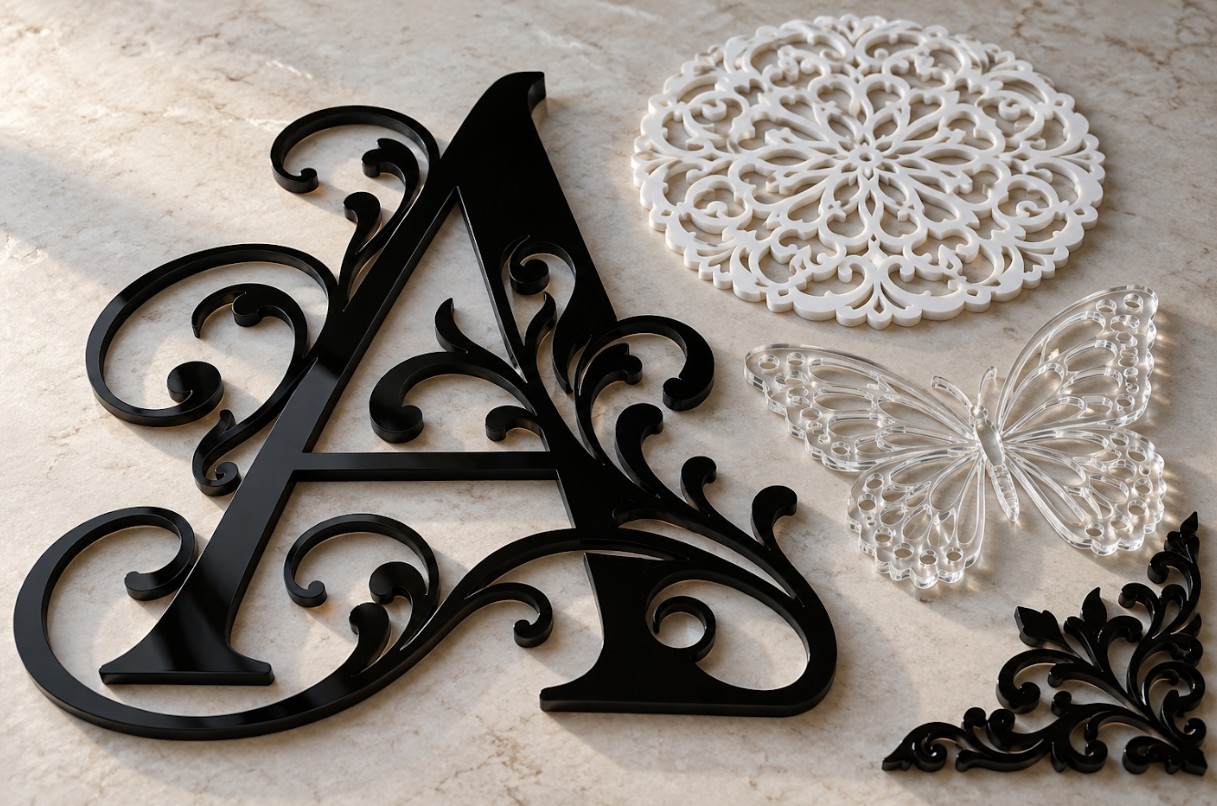 A great sign begins with a good design, but the way it is manufactured makes a real difference. Crisp lettering, accurate shapes and carefully finished details help a business look professional. Laser engraving and laser cutting offer practical ways to turn digital artwork into distinctive signs, display components, personalized products and decorative pieces.
CATZILLA SIGNS by Quarter Cheaper Signs LTD helps customers in Port Coquitlam, Coquitlam, Port Moody and Greater Vancouver plan custom signage and fabrication projects. Whether you need an engraved office plaque, acrylic logo components, wooden lettering or a small batch of branded items, the starting point is the same: choose a suitable material and match the production method to the design.
This guide explains how laser processing works, where it is useful and what to send when requesting a quote.
What Is Laser Engraving?
Laser engraving uses a focused beam to alter or remove material from a surface. The machine follows a digital design to reproduce text, logos, patterns or images. Depending on the material and settings, the result may be a recessed detail, a contrasting surface or a frosted appearance.
Unlike a printed graphic, an engraved design becomes part of the material itself. There is no separate printed layer to peel away, although the finished item’s durability still depends on the substrate, exposure and installation.
The appearance varies between materials. Wood can develop a darker engraved area, while clear cast acrylic can produce a frosted effect. A material sample helps establish the expected result before a larger order.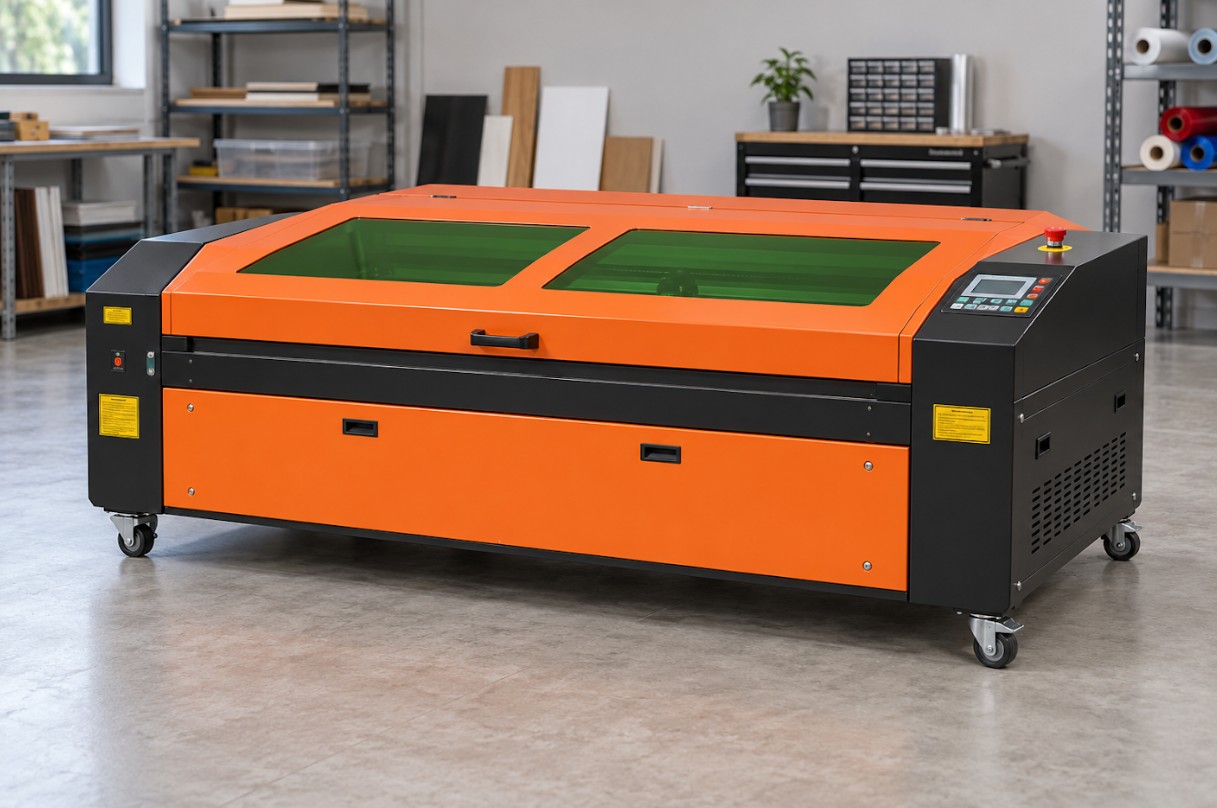
What Is Laser Cutting?
Laser cutting uses a focused beam to cut through suitable material along a programmed outline. Instead of engraving a logo onto a rectangular sheet, the machine can cut the sheet into the shape of the logo itself.
Cutting and engraving can be combined in one project. For example, a wooden plaque can have a custom outline, engraved text and mounting holes. An acrylic display can include cut components with engraved labels.
The achievable detail, thickness and edge finish depend on the material and equipment. These should be confirmed for each project rather than assumed from the artwork alone.
Engraving, Cutting and Marking: Understanding the Difference
These terms describe related processes, but they do not mean the same thing.
Engraving removes or alters surface material to create a design. Cutting passes through the sheet to separate a finished shape. Marking creates a visible surface change, sometimes without a significant recess.
This distinction matters when ordering metal products. A visible mark on a coated metal surface is different from deep engraving into bare metal. Both are also different from cutting a metal plate into a custom shape.
Send a reference photo if you have a particular finish in mind. Describing the result as “a dark logo on stainless steel” or “recessed lettering in wood” gives more useful information than simply asking for engraving.
Acrylic Laser Cutting and Engraving
Acrylic is a popular choice for signs, displays and decorative products because it offers a clean appearance and comes in many colours and finishes. Clear, opaque and translucent acrylic can each serve a different design purpose.
Suitable acrylic can be laser cut into letters, logos, display parts and custom shapes. With appropriate material and settings, cut edges can have a smooth appearance that complements the finished design.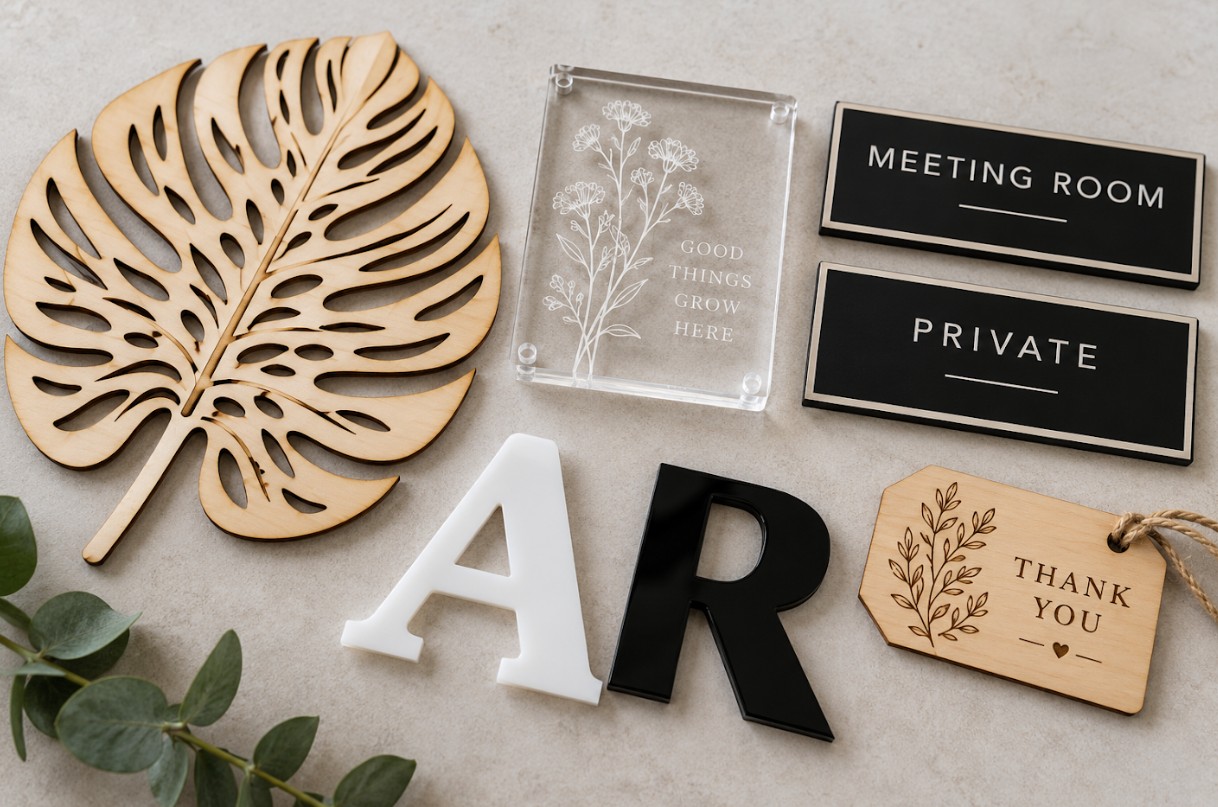
Cast acrylic is commonly preferred for engraving when a clear frosted contrast is required. Extruded acrylic behaves differently, so the choice should reflect whether the main priority is engraving, cutting, thickness consistency or cost.
Possible projects include reception logos, office plaques, tabletop displays, event lettering and engraved decorative panels. Material thickness, mounting method and intended viewing distance should be considered together when planning an acrylic sign.
Engraved Acrylic Signs with LED Lighting
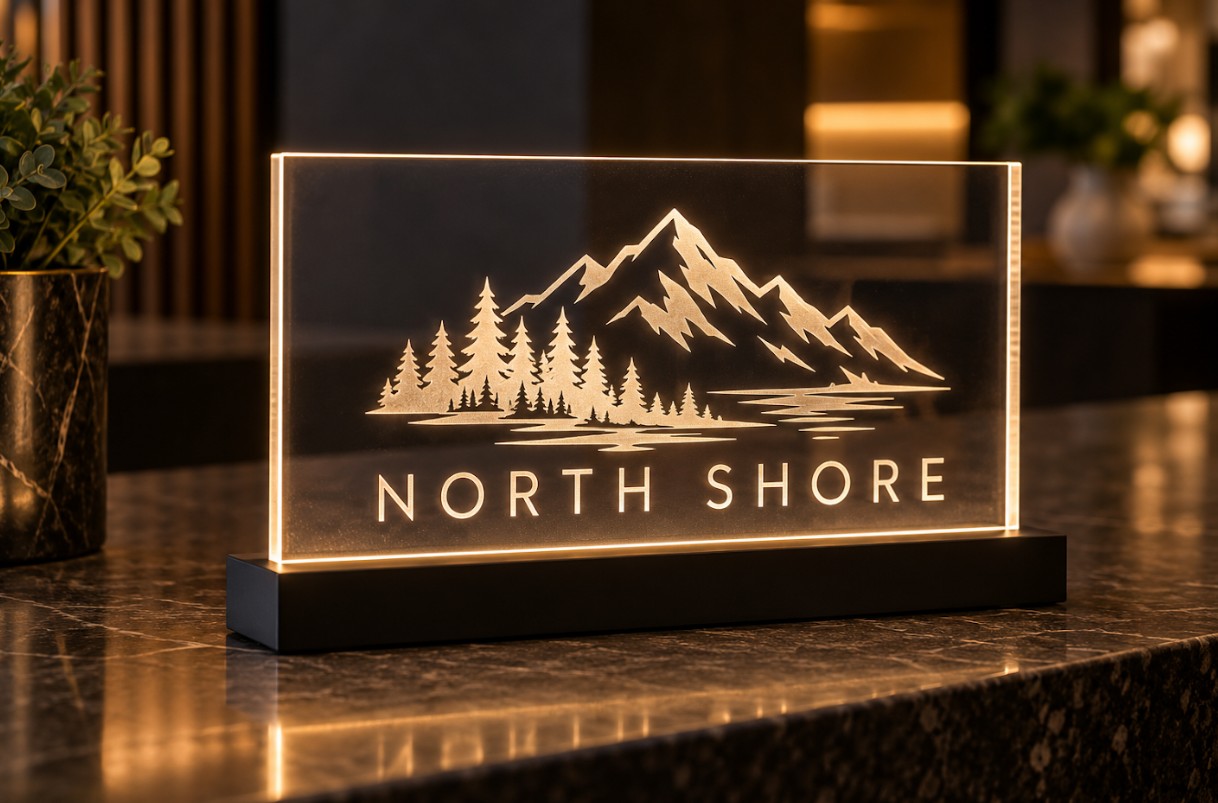
Engraved clear acrylic can create an attractive effect when paired with edge lighting. Light introduced through an edge interacts with engraved areas, helping the design stand out against the transparent panel.
This approach can suit reception displays, branded desk pieces, menu accents and decorative signs. The final appearance depends on engraving quality, panel thickness, artwork density and the lighting arrangement.
Lighting, supports, wiring and assembly are separate parts of the project. When requesting a quote, specify whether you need an engraved panel only or a complete display with lighting and a base.
Wood Engraving and Laser-Cut Wooden Designs
Wood offers warmth and natural variation that can suit cafés, boutiques, home décor and personalized gifts. Laser processing can reproduce text, logos and decorative patterns while preserving the character of the surface.
Potential applications include engraved plaques, wooden letters, wedding signage, ornaments, branded presentation pieces and display components. Suitable plywood can also be used for lightweight shapes and assembled designs.
Different wood species and sheet products produce different results. Grain, adhesives, surface coatings and moisture can influence engraving contrast and cutting quality. Laser-cut wood typically has darkened edges, which may become part of the design or require additional finishing.
For outdoor use, the wood, protective finish and mounting details all need attention. Engraving alone does not make untreated wood weatherproof or prevent movement caused by moisture.
Engraved Nameplates and Identification Signs
Engraved signs provide a practical option for spaces that need clear, consistent identification. Office doors, meeting rooms, reception desks and equipment areas can benefit from coordinated lettering and layouts.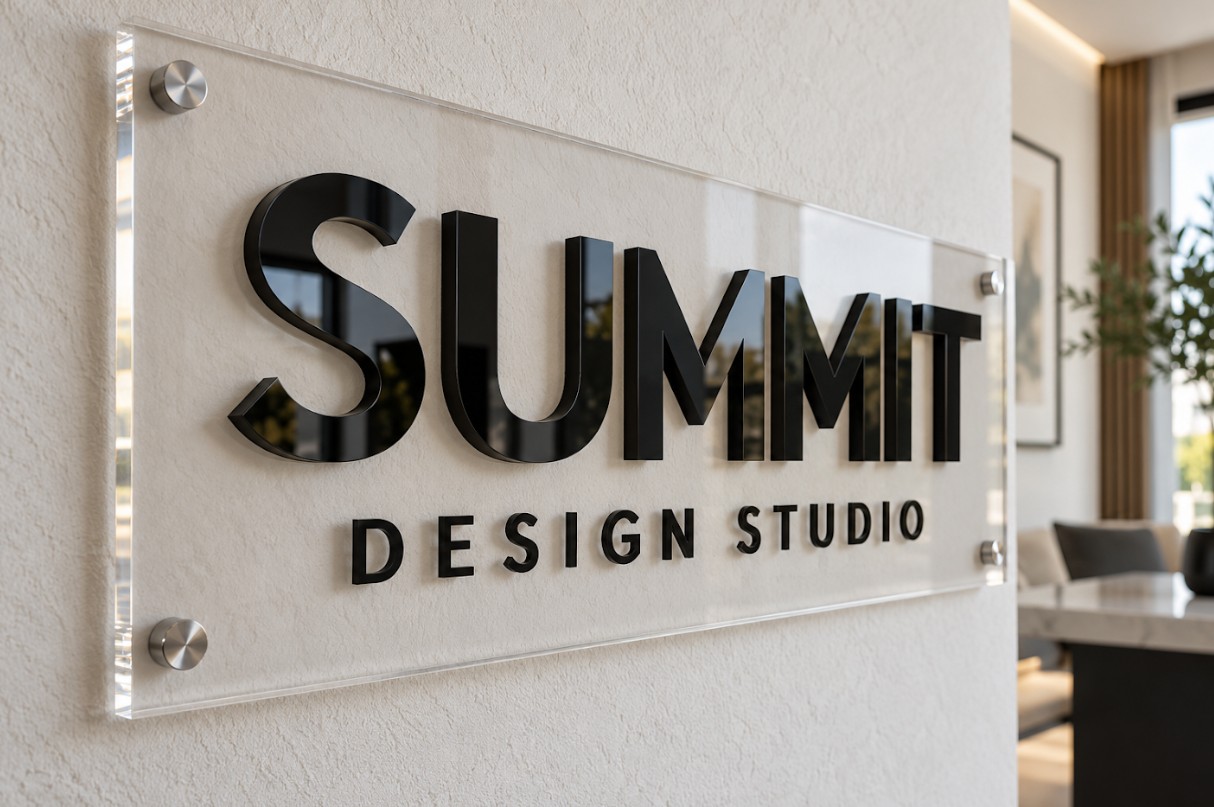
Purpose-made laser engraving laminates often use contrasting layers. Removing the surface layer reveals the underlying colour, producing readable text and symbols. The selected product must be rated for laser processing and for its intended environment.
Nameplates can include individual names, department titles, room numbers, logos or simple instructions. Mounting options may include adhesive backing, screw holes, holders or stand-offs, depending on the substrate and location.
Accessibility signage requires additional planning. Engraved visual text alone does not automatically satisfy requirements for tactile characters or Braille. Tell us if the sign needs those features so the appropriate construction can be considered.
Personalized Gifts and Business Branding
Laser engraving can add a personal touch to selected gifts and promotional products. Names, dates, messages and logos can turn a standard item into something associated with a person, event or company.
Examples include wooden gift pieces, acrylic keepsakes, award components and selected coated products. Compatibility must be checked before production, particularly when customers supply their own items.
A product that looks suitable may contain an unknown coating or composite material. Its shape may also make accurate positioning difficult. Curved objects can require special fixtures, and not every item fits the available equipment.
Can a Laser Engrave or Cut Metal?
Metal processing depends strongly on the laser source, power, material and intended result. A CO₂ laser used for acrylic and wood should not be assumed to provide the same capabilities as a fibre laser or an industrial metal-cutting system.
Some coated or anodized metal products can be marked by altering the surface finish. Certain bare-metal marking applications may use a compatible marking compound. These processes differ from deep metal engraving and from cutting through metal sheets.
When requesting metal work, identify the metal, coating, thickness and desired appearance. Include the product specifications if available. We can then assess the request and recommend an appropriate production approach.
For aluminium composite sign panels, CNC routing may be the better fabrication method. The correct process should follow the material rather than the preference for a particular machine.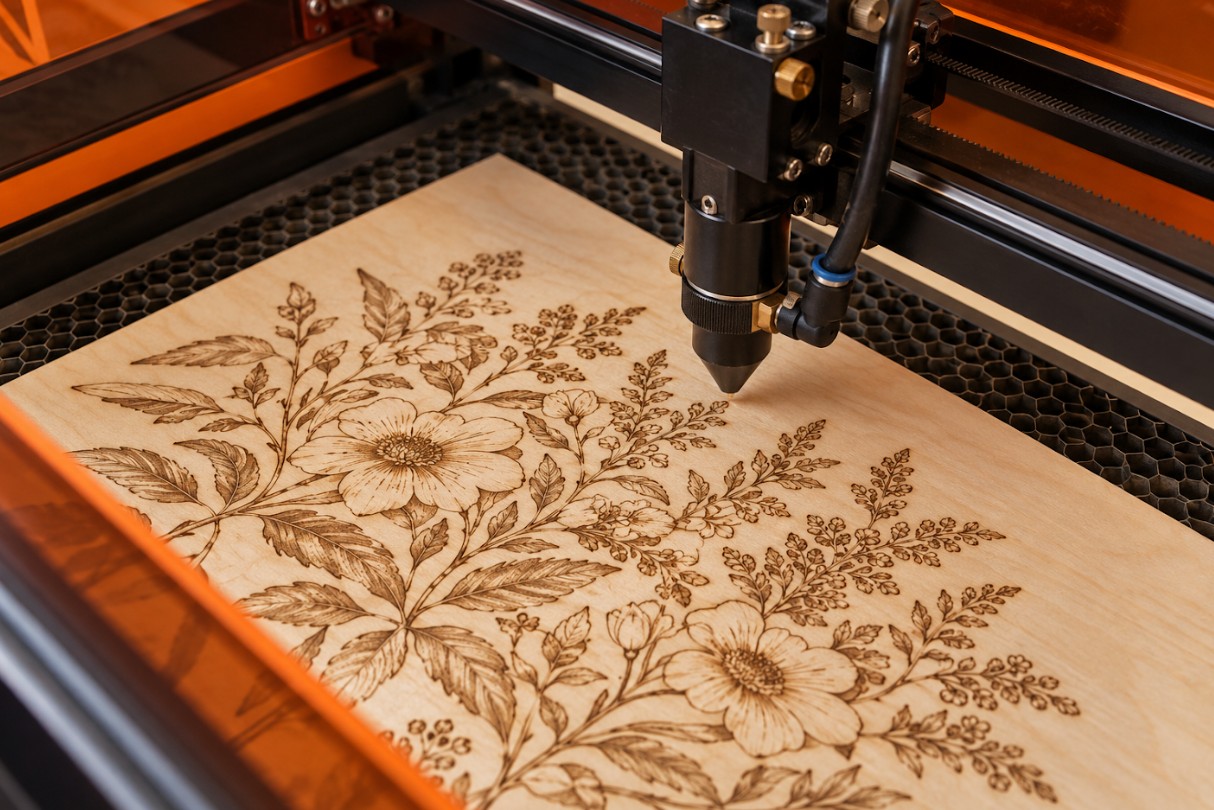
Materials Must Be Checked Before Processing
Not every plastic, coating or composite is suitable for laser work. A familiar trade name or appearance is not enough to establish compatibility. Supplier information and material documentation can help identify what a sheet or product actually contains.
PVC and many vinyl products are unsuitable for laser processing because they can release hazardous, corrosive emissions. Other unknown plastics, treated materials and composites also require assessment before acceptance.
This is particularly relevant for sign projects that combine several materials. A component suitable for printing or routing may be unsuitable for a laser, even if the finished products look similar.
Tell us whether your material includes paint, adhesive, protective film or another surface treatment. If its composition cannot be established, a different material or production method may be necessary.
Laser Cutting or CNC Router Cutting?
Both methods follow digital artwork, but they produce different results. Laser processing is useful for compatible sheet materials, engraved surface details and intricate outlines. CNC routing uses a rotating cutting tool and suits many thicker components, pockets and fabricated sign parts.
For a project involving acrylic, the preferred method may depend on thickness, edge finish and geometry. For PVC or aluminium composite panels, routing may be more appropriate. Some projects benefit from combining methods.
Send the intended design and application before choosing the process. A practical recommendation can help avoid unnecessary complexity and produce a part that works as intended.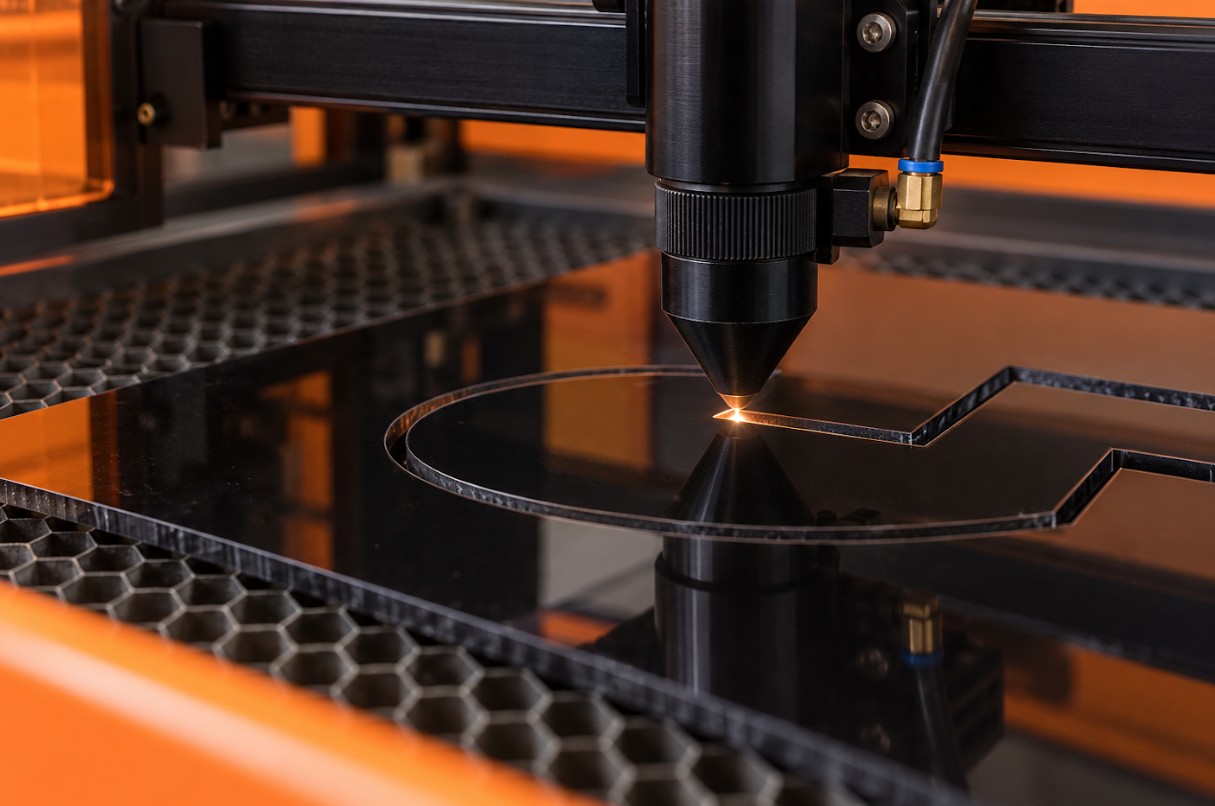
Preparing Artwork for Laser Production
Vector artwork is generally the best starting point for cutting. AI, SVG, EPS, DXF and vector PDF files can describe accurate outlines that remain clear when resized. The file extension alone does not guarantee usable vector content.
Prepare artwork at the required dimensions and convert text to outlines where possible. Cutting shapes should have clean, closed paths. Duplicate lines can cause repeated processing, while gaps or overlapping elements may create unexpected results.
Engraving can use vector artwork or suitable raster images, depending on the design. For photographs, a sharp source image with useful contrast is preferable. Tiny screenshots and heavily compressed images limit the detail available.
Separate cutting and engraving instructions clearly. Include a reference image showing the intended finished appearance, especially if your artwork contains several layers or different treatments.
What Determines the Price?
Laser work is priced according to the actual production requirements. Material, thickness, dimensions, quantity, engraving area, cutting complexity and finishing all contribute to the cost.
Two pieces with identical outside dimensions may take very different amounts of time. A simple outline is quicker to process than a dense decorative pattern. A small logo requires less engraving than a large filled background.
Artwork preparation, test samples, assembly and mounting hardware can also affect the quote. Customer-supplied items may require additional assessment before the job can be accepted.
Repeated pieces can make better use of setup time, although savings depend on the layout and processing time. Send the full quantity and specifications so the quote reflects the complete order rather than an assumed price per square foot.
Frequently Asked Questions
Can you engrave a photograph?
Photo engraving is possible on suitable materials, but the result depends on image quality and surface characteristics. Engraving produces a material-based interpretation of the photo rather than a full-colour print. A sample is useful when likeness or tonal detail is especially important.
Is an engraved sign suitable outdoors?
It can be, provided the substrate, finish and mounting system suit the environment. Outdoor-rated engraving material and suitable acrylic may be options. Wood requires appropriate protection. Describe exposure to rain, sunlight and cleaning chemicals when requesting a quote.
Can I supply my own material?
Send its specifications before bringing it in. We need to confirm composition, dimensions, surface condition and compatibility. Valuable or irreplaceable items should be discussed in advance because testing and processing can permanently alter the surface.
How long does production take?
Timing depends on material availability, quantity, artwork preparation and finishing. A production estimate can be provided after the specifications are reviewed. Confirm your required date early, especially for events or orders that need samples and assembly.
Request a Laser Engraving or Cutting Quote
To get started, email your artwork, dimensions, quantity, preferred material and required date. Tell us where the finished item will be used and whether you need engraving, cutting, mounting or assembly. Reference photos are welcome if you are still choosing a style.
CATZILLA SIGNS by Quarter Cheaper Signs LTD works with customers across Greater Vancouver from Port Coquitlam. Contact us through www.quartercheapersigns.ca to discuss your design and receive a quote based on the details of your project.
Workshop and pickup: 859 Huber Dr, Port Coquitlam, BC V3B 2T1. Visits by appointment.
CATZILLA SIGNS — GET NOTICED. OR GET EATEN.